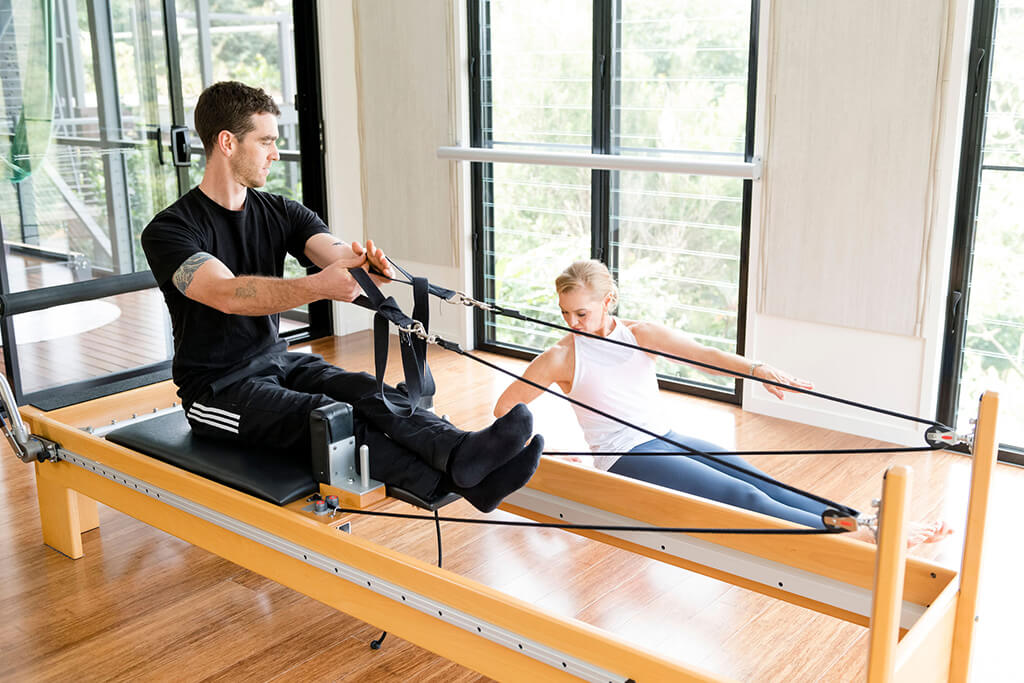


According to Mindbody platform data compiled by SchedulingKit, reformer classes average $32 per drop-in versus $18 for mat, and reformer classes generate 67% of total Pilates studio revenue despite having an average maximum capacity of just 12 participants.
Reformer classes carry higher equipment costs, stricter capacity limits, and significantly higher waitlist demand—3.1 times higher than mat classes—which means the pricing gap between them should be meaningful and deliberate.
An empty reformer bed during a booked class is lost revenue you cannot recover, and a pricing structure with multiple tiers, cancellation windows, and hybrid memberships becomes impossible to manage manually at any real scale. The right studio software is what makes a tiered pricing strategy actually work in practice.
Pilates class pricing is not a number you pick once and leave alone. It’s an active part of how your studio covers its costs, retains members, and stays profitable as overhead evolves. For studios offering both mat and reformer sessions, the challenge is compounded, as you’re managing two distinct cost structures, two different member expectations, and two different revenue ceilings under the same roof. This guide walks through how to approach pricing for each format, how to build a membership structure that reflects those differences, and how to protect that revenue from the operational gaps that quietly drain it.
Understanding the cost difference between mat and reformer classes
The financial gap between running a mat class and a reformer class is not subtle. Mat Pilates scales with floor space. Add a few extra participants, and revenue goes up with almost no added cost. Reformer Pilates is capped the moment you sign your lease, one machine, one spot, no exceptions.
That fundamental difference should drive everything downstream: your pricing, your capacity strategy, and the systems you use to manage both.
Calculating your baseline Pilates class costs and overhead
Before you set a price, you need to know what each class type actually costs you to run. For mat classes, the major variables are instructor pay, rent per square foot of floor space used, and any consumables like props. For reformer classes, those same costs apply, but are joined by equipment depreciation, ongoing maintenance, and the fixed cost of the floor space each machine permanently occupies.
A useful starting framework for each class is:
- Total monthly fixed costs (rent, utilities, instructor salary, insurance): Divide by total monthly class sessions to get a cost-per-class baseline.
- Cost per spot: Divide the cost-per-class by your class capacity. For a reformer class capped at 10, every empty machine raises the effective cost-per-filled-spot for the session.
- Target margin: Add your desired margin on top of the per-spot cost. This is your floor price, not your list price.
This calculation will produce different numbers for mat versus reformer, and those numbers should inform your pricing structure rather than what competitors down the street are charging.
Factoring in equipment maintenance and strict capacity limits
Commercial reformers require ongoing maintenance that mat classes simply do not. Springs, upholstery, and carriage mechanisms all degrade with regular use, and a machine that breaks during a session disrupts the class, requires repair spend, and pulls a revenue-generating spot out of your schedule. A realistic maintenance reserve of $1,000 to $3,000 per year across your equipment fleet is a real line item that your reformer pricing needs to absorb.
Capacity is the other reality to price around. According to Balanced Body Industry Report data compiled by SchedulingKit, the average maximum reformer class size is 12 participants. That hard limit means reformer revenue per session peaks earlier than mat revenue, and any unoccupied spots during peak hours represent a disproportionate loss relative to total session cost. Ultimately, your pricing has to reflect that constraint.
bsport's performance dashboard lets owners track revenue and margin per class type in real time, so you can see exactly which sessions are covering their costs and which are not, and adjust pricing or scheduling decisions accordingly.
Structuring your Pilates class pricing for maximum profitability
Once you understand your cost baseline for each format, the next step is translating that into a pricing structure that members can navigate and that generates consistent revenue. The goal is to price the premium reformer experience at a level that reflects its cost, while keeping mat sessions accessible enough to drive volume and serve as an entry point for new clients.
According to Airtasker's 2026 US pricing data, mat classes average $10 to $35 per drop-in session, and reformer classes typically run $25 to $85, with group reformer classes most commonly sitting in the $25 to $45 range nationally.
These ranges give you a market reference, but your pricing should be anchored to your actual costs first, then validated against your local market.
Here’s how to do just that:
Build distinct pricing tiers for premium equipment usage
A tiered pricing model treats reformer and mat as separate products rather than variations of the same class. That distinction matters both financially and psychologically. Members who understand the equipment, the smaller class size, and the level of instruction involved in a reformer session are far more willing to pay a premium when the pricing makes that difference clear.
A practical pricing structure might look like this:
- Mat drop-in: Positioned as your most accessible entry point. Priced to cover costs at a comfortable fill rate, with room to attract new clients and intro offers.
- Mat class pack: A 5 or 10-class bundle at a per-class rate slightly below drop-in. Encourages commitment without requiring a monthly membership.
- Reformer drop-in: Priced meaningfully higher than mat, reflecting the equipment, the capacity constraint, and the instructor-to-client ratio. This is not a slight premium; the market data supports a gap of at least 50 to 100% above mat pricing.
- Reformer class pack: Similar logic to mat packs, but at the reformer rate. Creates a middle-commitment option for clients who attend regularly but are not ready to subscribe.
Create hybrid memberships to drive cross-class attendance
Recent industry data shows that 62% of active Pilates clients are on membership plans rather than class packs, and members on autopay retain at 34% higher rates than class pack purchases.
This means that hybrid memberships are one of the highest-retention tools available to a dual-format studio. They give members flexibility across both formats while locking in monthly recurring revenue for you, and they encourage mat attendees to cross over into reformer, which is your higher-yield product.
A practical hybrid structure might include:
- Unlimited mat + reformer credits: Unlimited mat access combined with a set number of reformer sessions per month, for example, four to eight credits. Mat fills at a lower per-spot cost, so including it freely does not erode margin the way unlimited reformer access would.
- Tiered commitment levels: A lower-credit tier for occasional reformer users and a higher-credit tier for regulars, both at rates that reflect the reformer overhead while rewarding monthly commitment.
- Introductory hybrid offer: A discounted first-month package that includes a mix of mat and reformer classes, designed to convert new clients into long-term members before they default to a drop-in habit.
bsport's membership management tools are built to handle exactly this kind of layered structure, including credit-based systems, hybrid membership types with different rules per format, and seamless access through a branded member app, all without requiring manual administration.
Enforcing policies to protect revenue on limited reformer beds
A strong pricing strategy only delivers if the revenue it promises is actually collected. For reformer classes specifically, no-shows and unmanaged cancellations represent a direct and unrecoverable loss. Unlike a mat class where a last-minute empty space might barely register, a vacant reformer bed in a class of ten is a 10% revenue gap for that entire session.
The policies that protect reformer revenue are straightforward to define. Enforcing them consistently without manual oversight is where most studios without the right software fall short.
Here’s what you can do to enforce those policies to protect your reformer revenue:
Implement strict cancellation windows for machine classes
A cancellation window of 12 to 24 hours before class is the standard for premium reformer sessions, and it's defensible when communicated clearly at sign-up and in every booking confirmation. The window exists to give the waitlist enough time to activate and fill the spot before the class starts.
Late cancellation fees and no-show charges shift some of the cost of unused capacity back to the member and, more importantly, change booking behavior over time. Members who know a fee applies every time, without exception, book with more intention. The policy should include:
- A defined cancellation window (12 to 24 hours is standard for reformer classes)
- Automatic credit deduction or flat fee for cancellations inside that window
- A no-show charge set at the full class value or a meaningful flat rate
- Clear communication at the point of sign-up and in booking confirmations
Automate your waitlists to eliminate the empty bed drain
A cancellation policy protects you from the cost of late notice, while an automated waitlist protects you from the cost of empty beds regardless of when the cancellation happens.
When a spot opens up, manual outreach is too slow. By the time a staff member notices, texts the next person in line, and waits for a response, the class may have already started. Automated waitlist management eliminates that delay by notifying the next eligible member immediately and confirming their spot without any staff intervention needed.
Reformer waitlist demand is 3.1 times higher than mat classes, according to Mindbody data, which means there is almost always a member ready to fill a vacated spot if your system can reach them fast enough.
bsport's automated waitlist and cancellation enforcement handles both in real time, filling vacated reformer beds instantly and applying the correct fee or credit deduction without anyone on your team needing to step in.
Secure your studio's revenue with a unified Pilates pricing strategy
Mastering how to price Pilates classes is a combination of knowing your actual costs, setting rates that reflect the real difference between mat and reformer formats, and building the membership and policy infrastructure to collect that revenue consistently. The studios that get this right treat pricing and operations as one system rather than two separate problems.
bsport is built to support your unified pricing strategy and protect it. From layered membership structures and credit-based hybrid packages to automated cancellation enforcement and real-time class profitability reporting, it gives Pilates studio owners the tools to manage multiple pricing tiers without the administrative overhead. The result is a studio where every reformer bed is working as hard as your pricing says it should.
Stop losing revenue to empty reformers and clunky pricing tiers. Book a demo today to see how bsport's platform automates your memberships, enforces your policies, and maximizes your Pilates studio's profitability.