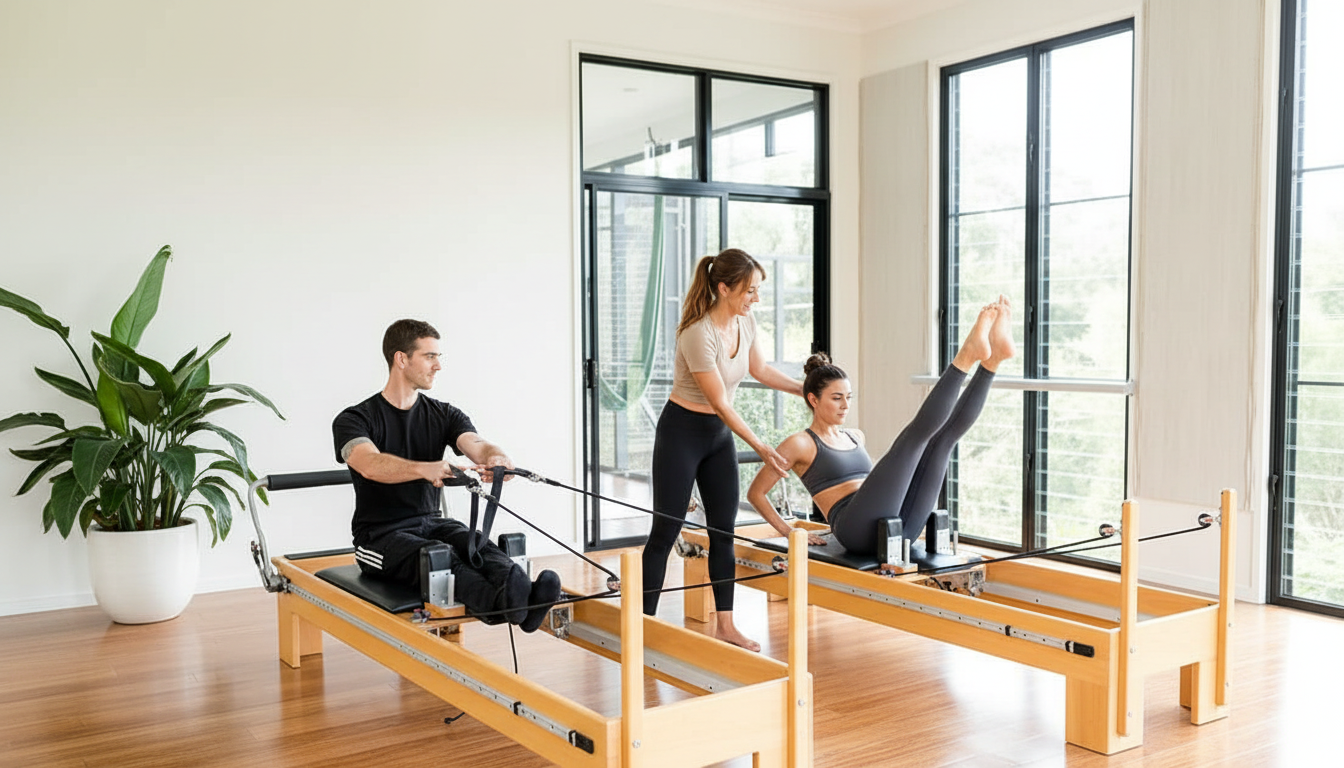


Unlike mat-based classes, where capacity is flexible, a reformer studio has a hard revenue ceiling determined by the number of machines on the floor. With commercial reformers costing between $3,000 and $6,000 each, plus ongoing maintenance, every empty machine during a session represents a direct and unrecoverable margin hit that can quickly derail your studio's break-even goals
To stay profitable without compromising the premium member experience, studios should aim for a "sweet spot" in occupancy. Falling below 70% leaves significant revenue on the table, while consistently exceeding 90% risks instructor burnout and overcrowding, which can degrade the high-touch form correction and personalized attention that Pilates members expect
Because the instructor-to-student ratio is so tight (ideally 1:8 to 1:12), manual waitlist management is too slow to fill last-minute gaps. Implementing automated waitlists and strict, software-enforced cancellation policies ensures that no-shows are instantly replaced or monetized, preventing "prime-time" spots from going to waste
Understanding the equipment and space costs of a Pilates reformer studio
A reformer Pilates studio carries a cost structure that is heavier and less flexible than most other boutique fitness formats, and that reality shapes every operational decision you will make.
Let’s decode that for you:
The unique economics of a machine-based fitness studio
In a yoga or mat-based class, squeezing in one extra participant costs you almost nothing. In a reformer Pilates studio, capacity is hardwired to the number of machines on your floor. Each reformer requires a clearance of at least 18 to 24 inches on all sides for safe instructor access, and needs consistent maintenance to keep springs, carriages, and straps performing reliably.
This means the reformer machine is the revenue unit, and each of those units needs to be earning its keep during every class you schedule.
Calculating the true cost of floor space and equipment
According to BASI Systems, a leading Pilates equipment manufacturer, commercial-grade reformers typically cost between $3,000 and $6,000 each. When you factor in towers, chairs, mats, and props, your total equipment budget can reach $30,000 to $60,000 upfront, with studio build-out adding another $20,000 to $50,000 on top of that.
Beyond the initial outlay, ongoing maintenance is a non-negotiable line item. Springs wear, carriages need realignment, and upholstery degrades with regular use.
Key fixed costs to account for include:
- Total hardware investment: $50,000 to $100,000 for equipment and build-out (of a 10-12 reformer studio).
- Ongoing maintenance: $1,000 to $3,000 per year for springs, upholstery, and carriage servicing
- Rent: Your highest ongoing fixed cost, which is directly tied to the floor space your machines occupy as well as the studio’s location.
Budgeting for the long term
Equipment is a depreciating asset, not a one-time expense. Commercial reformers require a maintenance schedule from day one. Investing in durable, studio-grade machines upfront reduces the risk of costly downtime and repairs that can disrupt your schedule and erode member trust.
This means you’ll also need to factor in a monthly maintenance reserve as part of your baseline operating budget.
Determining your optimal reformer Pilates class size
Once you have an understanding of what your fixed costs look like, the next question is how many people you need in each class to cover those costs without compromising the quality of experience your members are paying for.
Here’s how to figure that out:
Determining the balance between profitability and a premium member experience
The average class size for a Pilates studio is typically 8 to 12 participants, with a recommended instructor-to-student ratio of 1:8 to 1:10. These benchmarks exist for good reason, which is that reformer Pilates requires real-time form correction to avoid injury, attention to alignment, and the ability to modify exercises across different fitness levels and injury histories. Push past that ratio, and the quality of guidance drops noticeably.
A smaller class delivers a better member experience, which drives the retention boutique studios depend on. A larger class generates more revenue per session. The key is finding your studio's specific sweet spot, not chasing a universal number.
Figuring out your break-even point per machine
Your break-even calculation has to start at the machine level. According to BusinessDojo's profitability benchmarks for Pilates studios, a profitable studio should maintain a class occupancy rate between 75% and 85%.
If you fall below 70%, you’re leaving significant revenue on the table. If you keep it consistently above 90%, you run the risk of turning members away and degrading the experience they’re paying a premium for.
The simple framework to help you work it out looks like this:
- Total monthly fixed costs divided by revenue per spot = minimum spots needed per month
- Number of reformers x classes per week x weeks per month = total available spots
- Target occupancy of 75 to 85% x available spots = realistic filled spots to plan around
Studios charging $150 to $200 per member monthly can reach a break-even point with fewer active members, while lower-priced models need a larger membership base. It helps to review your Pilates studio business plan regularly to ensure your model reflects your actual costs.
Maximizing your reformer Pilates studio classes with smart scheduling
Knowing your break-even point is only useful if you have the tools to hit it consistently. How you structure your timetable, manage cancellations, and track performance across machines and time slots directly determines whether your studio runs at a profit or bleeds margin week after week.
When it comes to maximizing your Reformer Pilates classes via smart scheduling, here’s what you need to think about and act on:
An empty reformer is your biggest expense
An empty reformer during a scheduled class is not a “neutral outcome”. An empty reformer is lost revenue that you cannot recover. A mid-size studio running 8 to 10 classes daily with 6 to 8 participants at $35 to $45 per class generates between $30,000 and $40,000 per month. Even one or two consistently unfilled machines per class can shift that figure significantly across just one month.
A well-structured timetable built around your members' actual habits will outperform a dense schedule running at 55% capacity. Therefore, you need to build an effective class schedule for your Reformer Pilates studio to ensure you’re not only keeping the reformers occupied, but also maintaining member satisfaction and progress—both of which contribute to member retention and long-term revenue.
Recovering lost revenue with automated waitlist management
In a boutique fitness studio with 8 to 12 machines, a single no-show is a direct margin hit. Additionally, manual waitlist management is slow and inconsistent, which means that by the time a staff member contacts the next person in line, the class may have already started.
Automated waitlist management instantly notifies the next eligible member the moment a cancellation is made. When members can sign up to your waitlist for full classes and see their position in real time, you’ll be more likely to fill empty reformers due to no-shows and last-minute cancellations. This is especially important during peak hours, when each of your machines should be making you money.
Tracking the data that matters
You also need to know which classes consistently underperform, which time slots produce the strongest occupancy, and which machines are being underutilized.
This makes having a Pilates studio software solution with a reporting dashboard non-negotiable. The platform you choose should be able to show booking-to-occupancy data by class and time slots, giving you the necessary visibility to make scheduling decisions based on what is actually happening in your studio rather than what you assume is happening.
See where every reformer stands.
Real-time occupancy data, automated waitlists, and cancellation enforcement, built for studios where every machine has to earn its keep.
Reserving high-demand spots for loyal members
In a studio with a fixed number of reformers, your "prime-time" spots are your most limited and valuable assets. If these spots are filled by transient users from third-party apps like ClassPass, you risk alienating the loyal members who provide your consistent monthly revenue.
Maximizing your schedule requires using booking permissions and spot selection to prioritize your core community. By reserving high-demand time slots exclusively for members, you ensure that the people most invested in your studio always have access to the machines. This protects your margins by keeping your best inventory available for full-price, engaged members rather than losing it to inconsistent, third-party traffic.
Protecting your Pilates reformer studio margins with dynamic pricing
Filling your machines is one side of the margin equation. What you charge to fill them is the other. A well-designed pricing structure shapes member behavior, distributes demand across your schedule, and protects your revenue against the cancellations and no-shows that are inevitable in any studio.
Here are some things to consider:
Monetizing peak vs. off-peak class times
Not all time slots carry the same demand. Most Pilates studios see peak utilization during morning classes (6 to 9 AM) and evening blocks (5 to 8 PM), with weekends commanding the strongest demand overall. Charging the same price across all slots leaves money on the table.
A tiered pricing structure allows you to charge a premium for high-demand slots while using reduced rates to incentivize off-peak attendance. This distributes demand more evenly, improves overall occupancy, and gives price-sensitive members an accessible entry point without devaluing your premium experience.
For guidance on raising prices without losing members, check out bsport’s guide on raising studio pricing confidently.
Enforcing cancellation policies to secure your bottom line
When a member cancels a reserved reformer spot with no consequence, you absorb the full cost of that unused machine. A well-enforced late cancellation fee shifts some of that cost back to the member and incentivizes more reliable booking behavior over time.
Key policy elements to put in place include:
- A defined cancellation window (commonly 8 to 12 hours before class)
- Automatic credit deduction or fee charge for late cancellations
- No-show fees set at full class value or a flat rate
- Policy communicated clearly at sign-up and in every booking confirmation
Automated enforcement is essential, as manual enforcement is inconsistent and creates unnecessary friction. Software-automated policies apply the same rules to everyone, every time.
Running a profitable reformer Pilates studio comes down to the numbers behind each machine
Striking the right balance between your equipment costs and reformer class size requires some effort. After all, you can’t flex capacity the way a mat class can, which means the levers available to you are occupancy rate, pricing structure, cancellation enforcement, and schedule design. The studios that get this right are the ones that treat every machine as a revenue unit with its own data to track and optimize.
This is where bsport changes the equation. bsport is built specifically for boutique fitness studios, where a distinct member experience is the key differentiator, and delivering that experience is only possible when behind-the-scenes operations are managed smoothly. From automated waitlist management and real-time occupancy reporting to flexible pricing structures and cancellation enforcement, bsport gives reformer Pilates studio owners the tools to maximize yield per machine without sacrificing the experience their members expect.
Ready to see how it works in practice? Book a demo with the bsport team.