Opening a yoga studio or Pilates studio: Special considerations for planning and operation

Opening Your Own Studio: Concept, Planning & Key Success Factors
Opening your own studio is more than just a professional step for many trainers. It’s the desire to create your own space, define a clear philosophy, and build a community you actively shape.
Whether you want to open a yoga studio or a Pilates studio, the vision is often clear. But turning that idea into a sustainable boutique studio requires more than passion—it requires structure.
In boutique fitness, details matter. Clear positioning, well-designed processes, and a consistent member experience are not optional—they are the foundation of long-term success. This article shows what truly matters when planning and running your studio.
Requirements for Opening a Boutique Fitness Studio
A boutique studio is not just a smaller version of a traditional gym. It’s a carefully designed concept where quality and experience must align.
Professional qualifications and concept development
The first requirement is your expertise. Solid training in yoga or Pilates, practical experience, and ongoing education build trust.
In the boutique segment, members expect:
- High-quality instruction
- Proper technique
- Personal attention
This is especially important if you plan to position yourself at a premium level.
However, qualifications alone are not enough. A clear concept is essential.
Before opening, you should be able to answer:
- What does your studio stand for?
- What is your training philosophy?
- Who is your target audience?
- How is your offer different from existing studios?
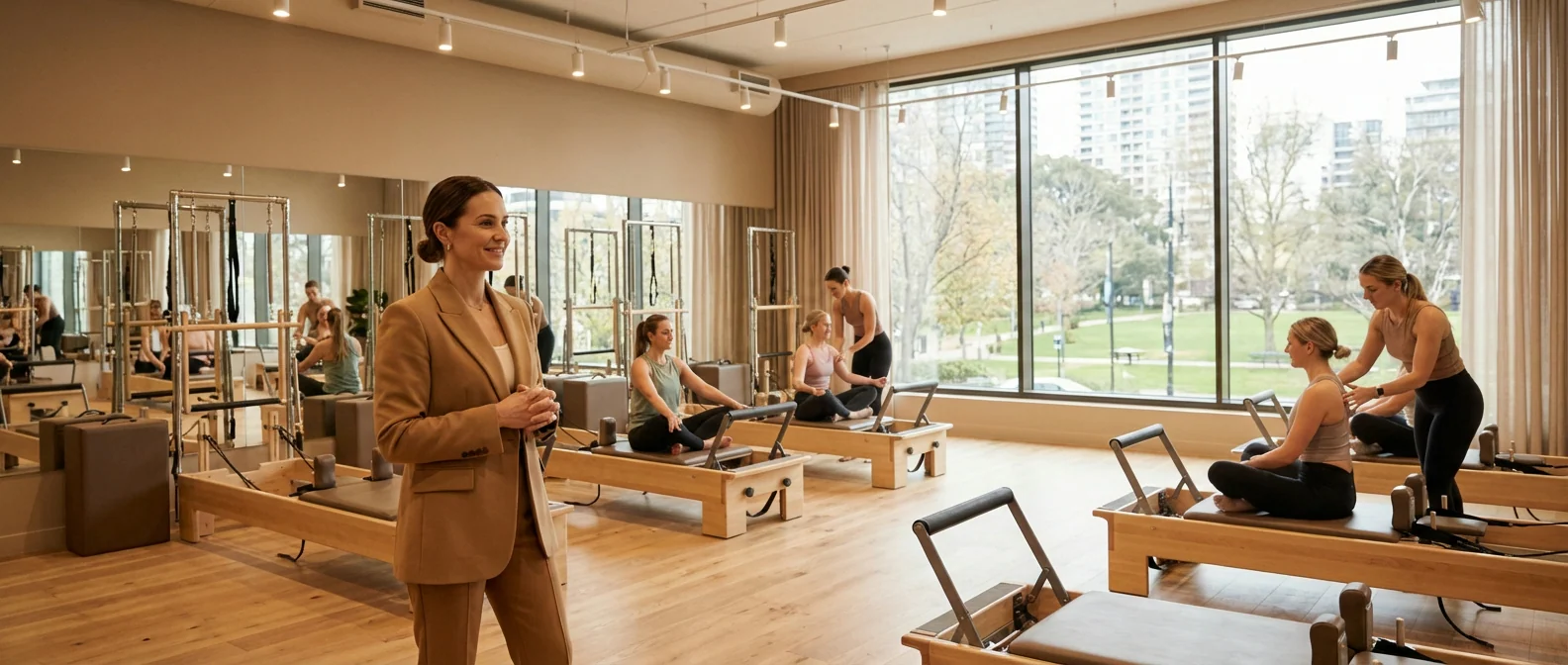
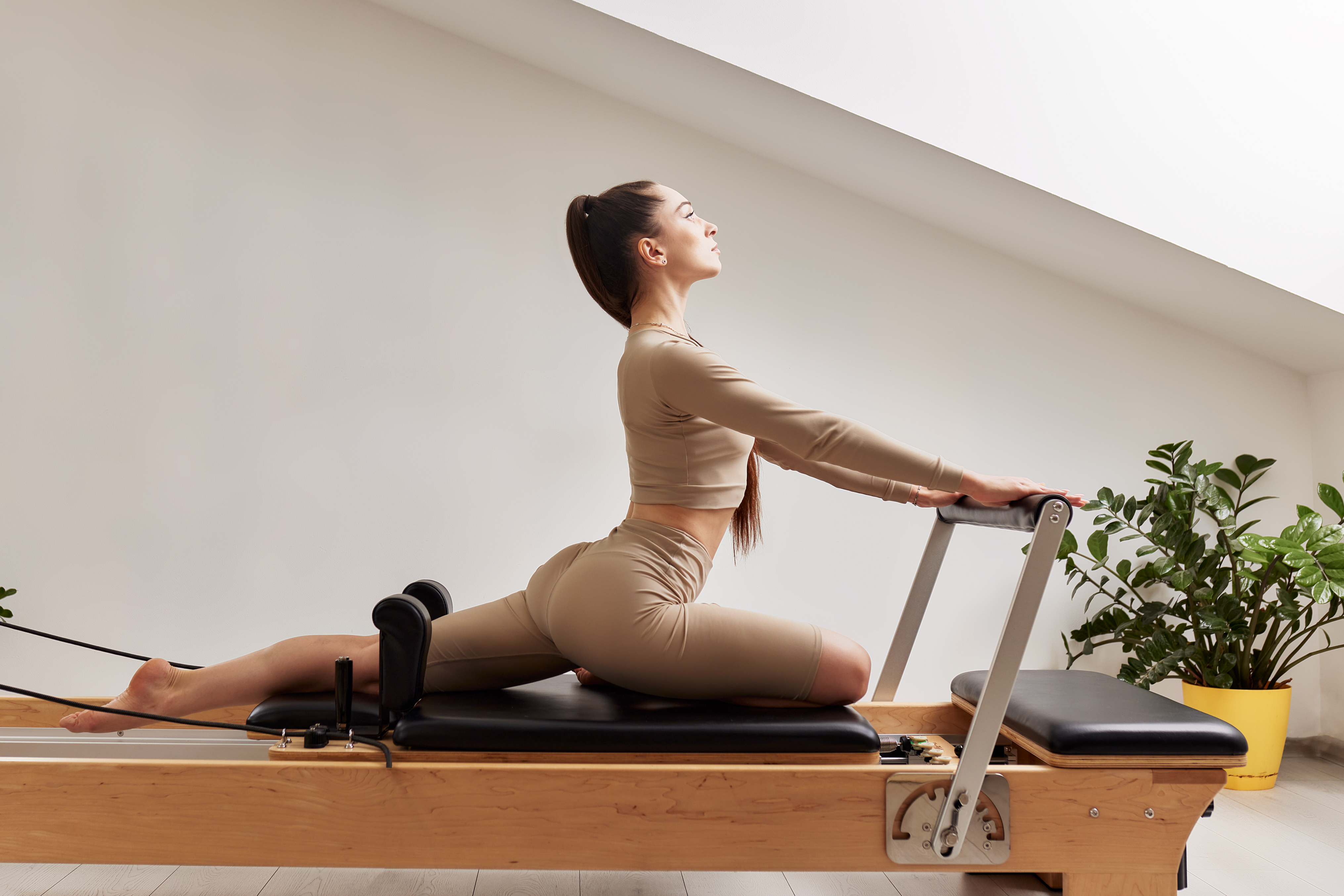
A yoga studio might focus on mindfulness and slow practices, or on dynamic, powerful flows. A Pilates studio might specialize in reformer classes or functional prevention programs.
The key is not to be “everything for everyone,” but to create clear expectations.
Practical tip:
Define three guiding principles (e.g. “small groups,” “clear progression,” “calm atmosphere”) and use them to guide every decision.
Legal and organizational foundations
You also need solid operational structures, including:
- Business registration and tax setup
- Insurance (liability, equipment, legal protection)
- Lease agreement or property purchase
- Contracts and data protection
- Clear terms & conditions, cancellation and no-show policies
Many founders underestimate this part. A structured plan prevents costly mistakes.
The better your foundation, the stronger your start.
Positioning in the Boutique Market
The boutique fitness market is growing—and so are expectations. Without clear positioning, your studio risks becoming interchangeable.
Defining your audience, community & member experience
Boutique fitness is about specialization. Everything starts with a clearly defined audience.
Ask yourself:
- Who should feel at home in your studio?
- What are their needs and challenges?
- What values do they share?
A studio for busy professionals will differ from one focused on rehabilitation or recovery.
Community doesn’t happen by chance. It’s built through:
- Clear communication
- Repeated rituals
- A sense of belonging
Simple but effective example:
Personally welcome new members, explain how things work, and ask for feedback after class. These small moments often make the difference between “that was nice” and “I’ll come back.”
Developing your concept, offer & brand identity
Your brand is more than a logo. It shows in:
- Language and tone
- Interior design
- Communication
- Class structure
A boutique studio needs:
- Consistent visual identity
- Clear tone of voice
- Structured programs (not random classes)
Example:
Instead of offering many unrelated classes, structure your offer into levels:
- Basics
- Build
- Progress
Add themed classes (e.g. back care, mobility, athletic training).
This helps members progress and improves retention.
Differences between yoga and Pilates:
- Yoga → differentiation through style, philosophy, atmosphere
- Pilates → differentiation through structure, equipment, progression
The goal is not to offer more—but to offer the right things consistently.
Planning & Financial Foundations
Passion alone won’t sustain a studio. Financial clarity is essential.
Pilates studios often require higher upfront investment (equipment), while yoga studios rely more on group size for scalability.
Location, costs & business plan
A common question: How much does it cost to open a studio?
There’s no single answer—but you should break costs into categories:
- Rent and deposit
- Renovation and setup
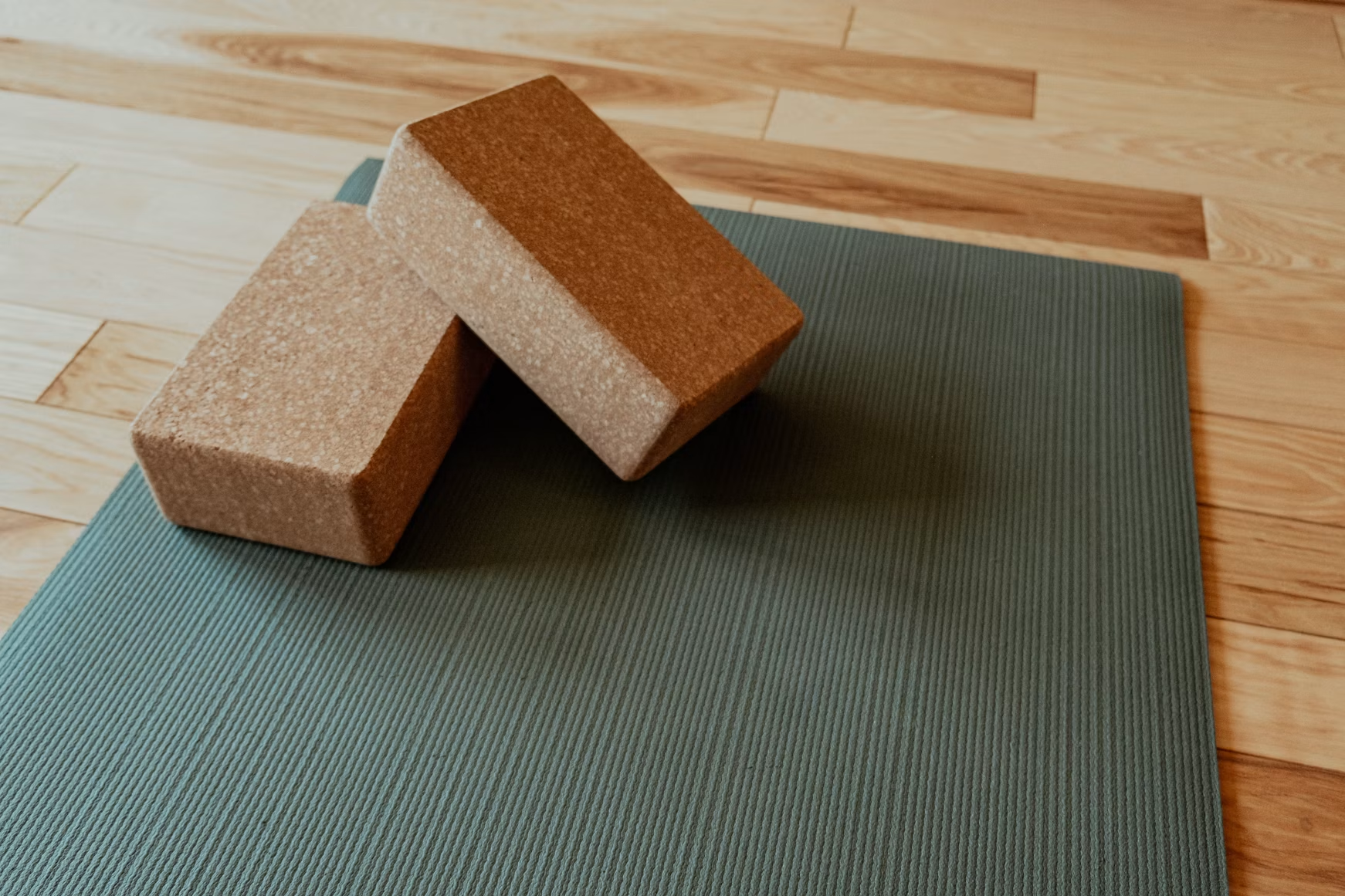
- Equipment (mats, props, reformers)
- Marketing
- Digital tools (booking, payments, website)
- Financial buffer for first months
Practical approach:
Work backward from your target occupancy:
- How many spots per week can you offer?
- What occupancy is realistic in the first 3 months?
- What fixed costs must be covered?
This ensures your model is viable.
Pricing strategy
Your pricing must match your positioning.
Typical models:
- Monthly memberships
- Class packs (e.g. 10 sessions)
- Intro programs
- Premium offers / personal training
Yoga studios: scale through group size
Pilates studios: scale through premium pricing and small groups
Capacity management becomes crucial, especially for reformer classes.
Tip:
Create a clear entry point (intro offer) + a follow-up offer (membership or program).
Operational Setup Before Opening
Many founders focus on design and marketing—but operations determine your daily success.
Planning classes, memberships & processes
Before opening, define:
- Booking system (app, website, in-person)
- Waitlist management
- Payment methods
- Membership handling (pauses, cancellations)
Start with a focused schedule—not too many classes. Expand based on demand.
Also define everyday scenarios:
- Late arrivals
- Full classes
- Cancellation deadlines
Clear rules build trust and reduce friction.
Digital tools
Digital systems are essential in boutique fitness.
A yoga or Pilates studio software should include:
- Booking
- Member management
- Payments
- App
- Website integration
This reduces admin work and ensures a smooth member experience.
Designing the Member Experience
In boutique fitness, experience drives loyalty.
People come for the workout—but stay for how it feels.
Atmosphere, community & consistency
Atmosphere is built through details:
- Lighting and temperature
- Sound and music
- Cleanliness
- Welcome experience
- Communication
From the first website visit to the studio check-in, everything should feel consistent and professional.
Community is built through:
- Events
- Workshops
- Challenges
- Monthly themes
Ensuring quality & preparing for growth
Long-term success requires continuous improvement:
- Collect feedback
- Analyze class performance
- Adjust offers carefully
- Invest in training and standards
As you grow, consistency becomes critical—especially if you hire more instructors.
Conclusion
Opening a yoga or Pilates studio is a business decision that goes far beyond teaching.
You need:
- A clear concept
- Financial clarity
- Strong processes
When positioning, class structure, and member experience align, you create a boutique studio that not only launches—but grows sustainably.
Want to Open Your Own Studio?
If you’re planning to open a Pilates or yoga studio, it’s worth investing early in systems that streamline booking, payments, and member management—so you can focus on what really matters.
Discover how bsport helps boutique studios grow in a structured and sustainable way.


.jpg)