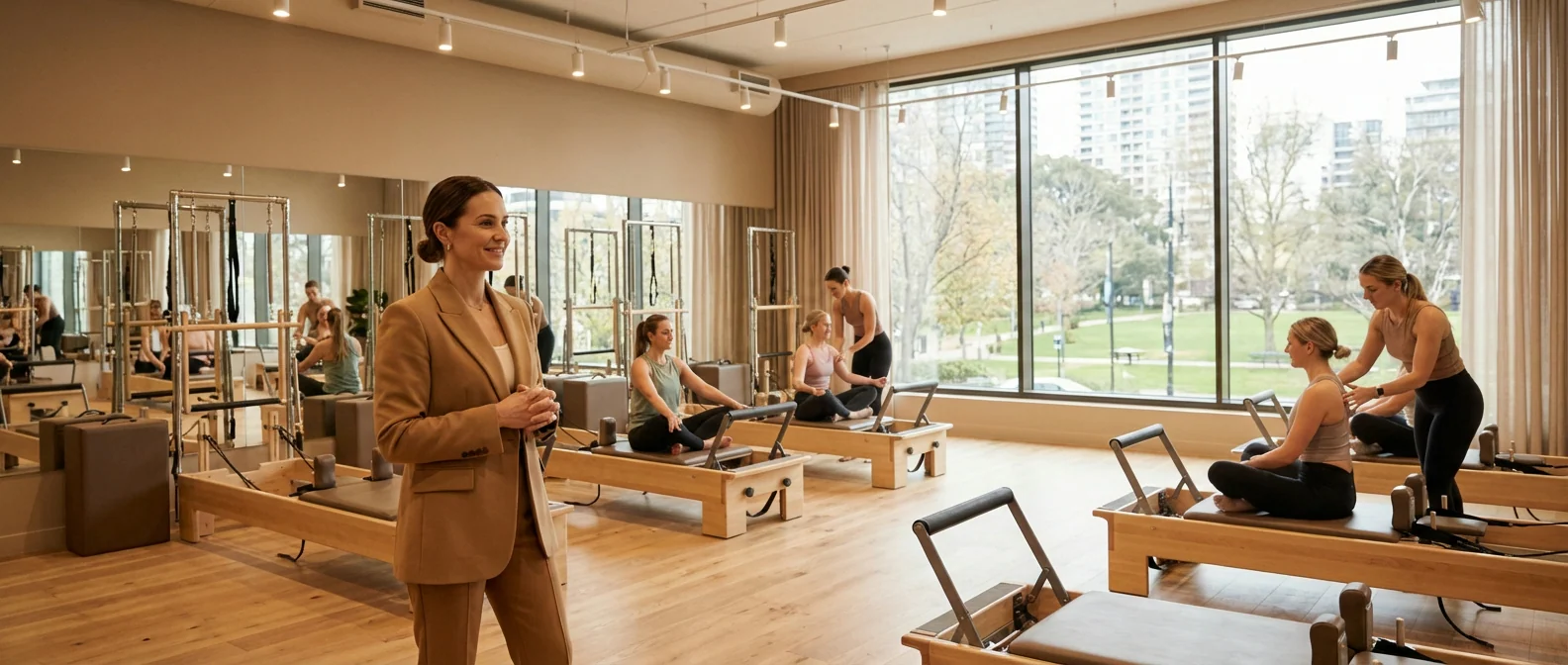
While 61% of fitness members discover studios based on proximity, they ultimately choose where to sweat based on how welcome they feel and the quality of the instructors. Being the closest option only gets you on the shortlist; your studio’s atmosphere and coaching are what actually close the deal.
Distance is rarely the primary dealbreaker—timing is. Research shows that 63% of prospects will skip a studio if class times don't align with their daily routine, making a demand-driven timetable more important for conversion than your physical zip code.
A complicated booking flow is enough to turn away 19% of motivated prospects before they ever step foot in your building. Because nearly 80% of members now book via mobile apps or websites, your digital interface serves as the "front desk" that determines whether a lead turns into a loyal community member.
Location drives discovery, not decision
There's no question that location matters.
Market research by bsport indicates that proximity is the primary driver of discovery when people search for a new studio, with 61% choosing boutique fitness locales based on how close they are to home or work (from the bsport Fitness Studio Playbook). Word of mouth is almost as influential (58%), while a third discover studios through social media (35%), and search engines (34%).
That's an important advantage. If your studio is nearby, you're already in the consideration shortlist.
But location only gets you to the starting line.
The same Playbook shows that once people begin evaluating a studio, experience-led factors take over. Feeling comfortable and welcome ranks highest at 64%, followed by high-quality instructors at 60% and fair pricing for value at 59%. Proximity drops well below those factors when people decide whether to actually try a studio or not.
That's the real dynamic boutique studios have to understand. People may discover you because you're close, but they choose you because the experience feels right, and is confirmed by word of mouth or online reviews.
The right experience includes a welcoming atmosphere, high-quality coaching, clear membership information, and discovery offers that reinforce value for money.
The real barriers to fitness member conversion
When nearby prospects aren’t booking it’s easy to assume the problem is visibility or a miscalculation of foot traffic.
Think again. According to the Playbook, the biggest barrier to first visits is scheduling. 63% of respondents said class times that don’t fit their schedule would stop them from trying a studio. By comparison, 38% said an inconvenient location would stop them, while 19% pointed to a complicated or unclear booking process.
That changes how studios should think about convenience.
Distance is certainly one factor for convenience, but the more important issue today is whether the experience fits the client's lifestyle. Can they find a class that works with their daily schedule? Can they understand the offer quickly? Can they feel confident that what they see is what they'll get?
If the answer to those questions is no, a studio will feel inconvenient even when it’s only a few minutes away.
Scheduling as the driver for conversion
When the right classes are available at the right times, proximity and strong local awareness start working in your favor.
A motivated prospect might be willing to try a class before work, after work, or between other commitments. But if your timetable is built around internal needs rather than actual member demand, those windows may not exist. The result is familiar: empty classes in some slots, overbooked waitlists in others, and local prospects deciding the studio just doesn’t suit their life.
For many studios, a good scheduling offer also means offering enough variety in their training options. A member looking for Pilates, strength work, or yoga may be open to trying your studio, but only if the schedule makes that choice realistic.
Is booking friction blocking growth of your fitness community?
Once someone finds a studio and sees a class that could work, the next question is simple: how easy is it for them to act?
Remember that 19% of potential fitness members who say a complicated booking process is enough to put them off? That's a meaningful leak – and it occurs at the exact moment when intent should turn into action.
In fact, the booking experience matters more than many studios think. That's because in boutique fitness the class isn’t the only product.
The peripheral experience leading up to a class booking shapes trust before anyone walks through the door. If the path to book feels slow, confusing, or inconsistent, people start making assumptions. They wonder whether the studio is really that organized, whether the offer is true, and whether they might feel awkward during a visit.
That’s especially risky when fitness studio members and prospects increasingly book through studios’ own booking channels. The playbook shows that 42% book through a studio’s mobile app and 37% through the studio website. Put together, that makes direct booking channels the dominant booking method for most fitness businesses.
For studios, that means the digital journey isn’t a support function. It’s part of the first impression. It’s where prospects judge the offering for:
- Transparent pricing
- Visible class availability
- Easy access to relevant information
- Online class booking
- Appropriate payment methods
All these factors shape whether a potential member completes the process.
Mobile expectations are now the baseline
Member mobile apps mean people can check class timetables and book whenever motivation strikes: during a commute, on a break between meetings, after seeing a recommendation, or right after finishing a class somewhere else. These are quick decision windows. The person is interested now. They don’t want to decode pricing, click through a messy flow, or wait for a manual response.
That’s why a strong booking experience needs to feel fast, clear, and intentional in a mobile first environment.
bsport believes execution across every touchpoint shapes how members feel, and affects whether people book, return, and stay. That doesn't imply complexity, it just adds to the grounds for making every step of the journey feel simple and coherent.
When local discovery leads into a clean digital experience, that's when the value of proximity is truly leveraged as a growth advantage.
As you grow, clarity matters more
For studios expanding beyond a single site, the challenge gets even more practical. Prospects want to understand the offer across other participating locations, what services and amenities are available at each one, and how to track their bookings, credits, or membership usage without confusion. The more clearly those details are communicated, the easier it is to maintain trust as the business grows.
The first fitness community visit is where loyalty starts
Once someone books, the studio has a surprisingly small window to prove the newcomer made the right decision. bsport records show that for more than 90% of new members, the decision to continue occurs within their first three classes, and nearly a quarter decide after just one.
This is where boutique fitness has an edge over larger, less personal models. First-time visitors aren’t just evaluating the workout. They’re evaluating how the space feels, how they’re welcomed, whether the class atmosphere suits them, and whether they can picture themselves coming back next week.
Studios that win here usually do a few things well at once:
- They make the arrival feel straightforward
- They create confidence from the start
- They remove awkwardness
- They make people feel seen
- They make the next step obvious; whether that’s a second booking, an intro offer, or a follow-up message that lands at the right moment
A low-friction entry point can help here too. That might mean a trial class, a limited-time free session, or another kind of free access offer that lets prospects experience the studio before committing to a full membership.
Making the fitness member experience more of a feeling than a service
Instructors and coaching quality rank first among the reasons members return to the same studio, which makes them a core part of retention. Also, in boutique fitness, great coaching makes clients feel that the studio supports their fitness goals. But it doesn’t stand alone. The broader experience members seek is one where they feel comfortable, welcome, supported, and confident that they belong.
For one member, the goal may be stress relief or learning a routine. For another, it may be strength gains, better mobility, or improvements in body composition. The most effective studios make room for diverse motivations while still delivering a cohesive brand experience.
That reflects the reality of boutique fitness. A repeatable experience that feels motivating, personal, and consistent. If you can't supply that, all you deliver is anonymous access to equipment, or a generic club environment.
Community is what solidifies a fitness studio member’s routine
Retention gets even stronger when members feel connected, not just satisfied.
bsport statistics show that only 1 in 10 respondents attend purely for the workout, while around 7 in 10 say being around others is an important part of the experience. Consistent relationships and personalized attention can only strengthen that sense of connection.
A strong studio becomes the highlight of someone’s week. It's a place where instructors are familiar and other members are recognizable. That sense of belonging is hard to replicate, and it’s one of the clearest reasons boutique studios can outperform larger, more transactional models.
This is especially true for studios that are independently owned and operated. Their advantage is often not scale, but identity: a clearer point of view, a more personal experience, and stronger day-to-day connection with the people they serve.
Proximity gets you noticed. Experience gets you growth.
Location still matters. It always will.
But proximity is only the opening advantage.
The studios that turn that advantage into real growth are the ones that understand what happens next: class times need to fit real lives, booking needs to feel effortless, the first visit needs to build confidence, and the overall experience needs to make people want to return.
Ready to turn local interest into lasting membership? Download the full Fitness Studio Playbook for more data-backed insights on discovery, conversion, retention, and studio growth, or book a demo to see how bsport helps boutique fitness brands deliver a more consistent member experience at every stage.


.jpg)