Opening a boutique yoga studio, or expanding your brand to new locations, is a deeply meaningful adventure. You're creating a physical space for reconnection, transformation, and community. Yet one essential question arises for every founder during this process: how do you determine the optimal dimensions for your yoga studio?
It’s a choice that directly impacts your day-to-day operations and your long-term success. Your yoga studio's size influences your fixed costs, your capacity to comfortably welcome members, and your ability to scale. If your space is too small, your growth quickly hits a ceiling. If it is too large, you risk taking on unsustainable rent in the early stages.
This guide walks you through the key considerations for choosing a surface area that matches your needs, target audiences, and vision. Including practical criteria and layout considerations to help you make a confident, informed decision.
Key takeaways:
- Your studio location and target audiences play a major role in determining the financial viability of your chosen square footage.
- Determine your yoga room dimensions based on your specific practice styles, allocating 2-4 square meters per student, plus necessary buffer zones.
- Avoid calculating your total lease requirements based solely on practice capacity; account for transition areas like reception and changing rooms.
- Select a flexible floor plan that supports your long-term vision and prevents the need for a costly relocation as your membership grows.
Why your yoga studio size is a strategic decision
Many founders underestimate how much size shapes their boutique studio success. Yet it’s not just a matter of aesthetics or logistics — it’s a lever for both client experience and profitability.
A well-proportioned space allows you to:
- Run a successful yoga class in a calm, comfortable space where every student can move, breathe and relax freely
- Accommodate more students without compromising the quality of teaching
- Ensure smooth daily operations: movement flow, storage, changing areas...
- And most importantly, create a sustainable business model that supports your goals
5 Key considerations for your yoga studio dimensions
1. How geographical area impacts yoga studio size and cost
Where your future studio is located will play a major role in determining the ideal surface area. In city centres or high-density areas, rent is more expensive and every square metre must be justified by high occupancy. In contrast, in suburban or less dense zones, you may access larger spaces at a more reasonable cost.
It’s essential to balance your budget with the local demand. How many other studios already exist nearby? What’s the demographic profile of the local population? Are they willing to travel for classes? What’s the average income in the area? Even a basic market study can make a big difference.
Key points:
- Urban areas = maximum space optimisation, high student turnover
- Suburban or rural areas = more space, but audience needs building
- Benchmark against similar studios in your area to find your ideal balance
2. Calculating yoga room size by student and class size
Not all yoga styles require the same amount of space. A gentle yoga class like yin, nidra, or prenatal needs less room per person, as movements are slow and mostly floor-based. Dynamic flow, aerial yoga, or pilates classes tend to require more space per student.
Here are the general baseline recommendations per person:
- Gentle yoga (yin, restorative): 2 square meters (approx. 21.5 sq ft)
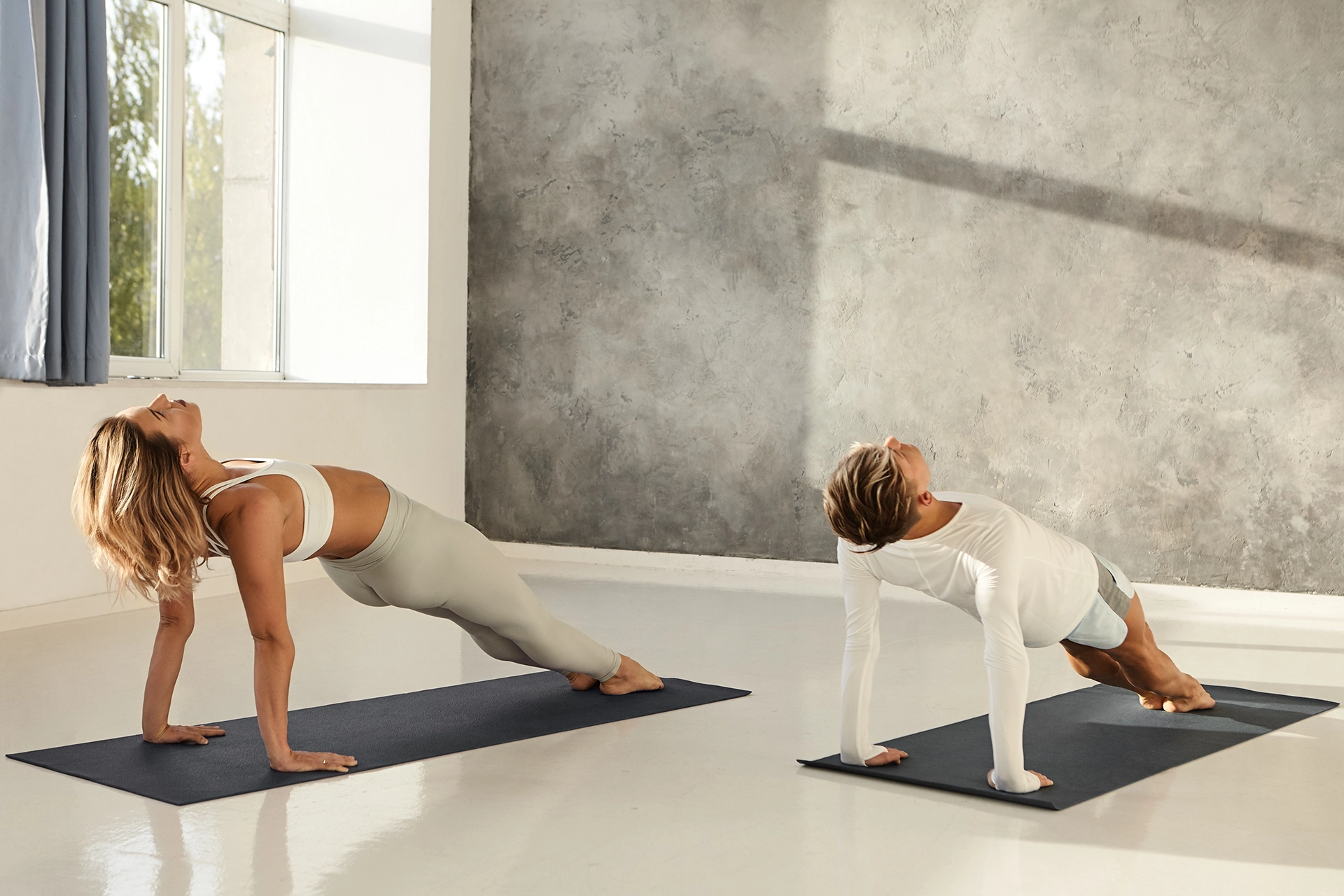
- Dynamic yoga (vinyasa, ashtanga): 2.5 to 3 square meters (approx. 27 to 32 sq ft)
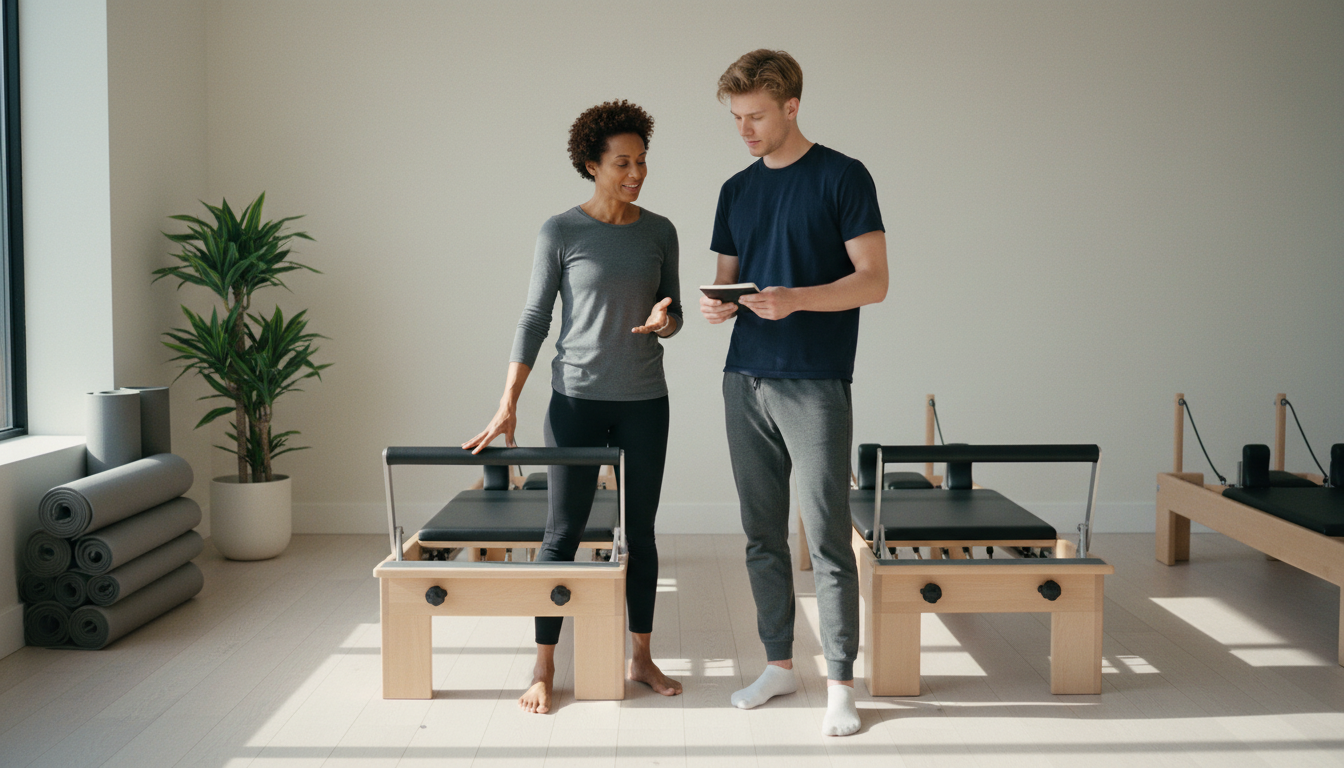
- Classes with equipment (aerial, pilates): 3.5 to 4 square meters (approx. 38 to 43 sq ft)
Keep in mind that dividing your total floor space by these numbers will not yield an exact capacity calculation. Teacher space, walkways, prop storage, and fixed architectural obstructions reduce your usable capacity. You should also consider movement amplitude and your ability to navigate freely between mats to adjust postures or maintain a peaceful atmosphere for your members.
Always add a buffer for these needs. It is better to have one fewer student than a cramped, uncomfortable class. To further help you visualize your required layout, here is how those per-person estimates translate into common class sizes:
Note: These figures cover the practice room only. They do not include the space required for your reception, storage, toilets, changing areas, or general circulation space.
3. Your target audience
Your space should be designed with your ideal students in mind. An intimate fitness studio won’t appeal to a crowd looking for high energy and community vibes. Likewise, a large cold space may overwhelm beginners looking for calm and connection.
Think about:
- Experience level: beginners prefer smaller groups and comforting environments, while more advanced students can handle larger class dynamics
- Neighbourhood habits: a residential area may favour daytime or family-friendly formats; a city centre may cater to after-work busy flows
- Comfort and privacy expectations: specific audiences (e.g. prenatal yoga, therapeutic sessions) require extra care in space design
Your audience doesn’t just impact the size — it shapes the layout, vibe, and rhythm of your classes.
4. How practice style impacts space requirements
A common trap: renting a tiny studio “just to start”, only to outgrow it within six months. It's crucial to align the space with your true ambitions from the outset.
Ask yourself:
- Do you plan to teach alone, or will you bring in other instructors?
- Will you offer workshops, retreats or themed classes in the future?
- Could you rent out the space to other professionals?
- Do you need a separate room for treatments, coaching, or one-on-one sessions?
A space that can grow with you saves you from having to reorganise everything too soon. Sometimes, investing slightly more in a flexible space pays off long-term — more so than having to move after just one year.
5. Planning space for the practice room and supporting areas
When calculating your yoga studio dimensions, clearly distinguish between the size of your practice room and the total footprint required for your entire business. While your practice room will naturally take up the majority of your space, you must allocate enough room for supporting functions and comfortable circulation.
Determining your total lease requirements based solely on your practice room capacity is a common oversight that leads to cramped transition areas. It’s also worth noting that your transition zones are essential for delivering a premium boutique experience. These are the areas where students arrive, change, connect, and store their belongings.
The balance between practice space and these supporting areas will shift depending on your specific business model:
- Small, appointment-based studios: You may only need a compact reception desk and a simple storage area.
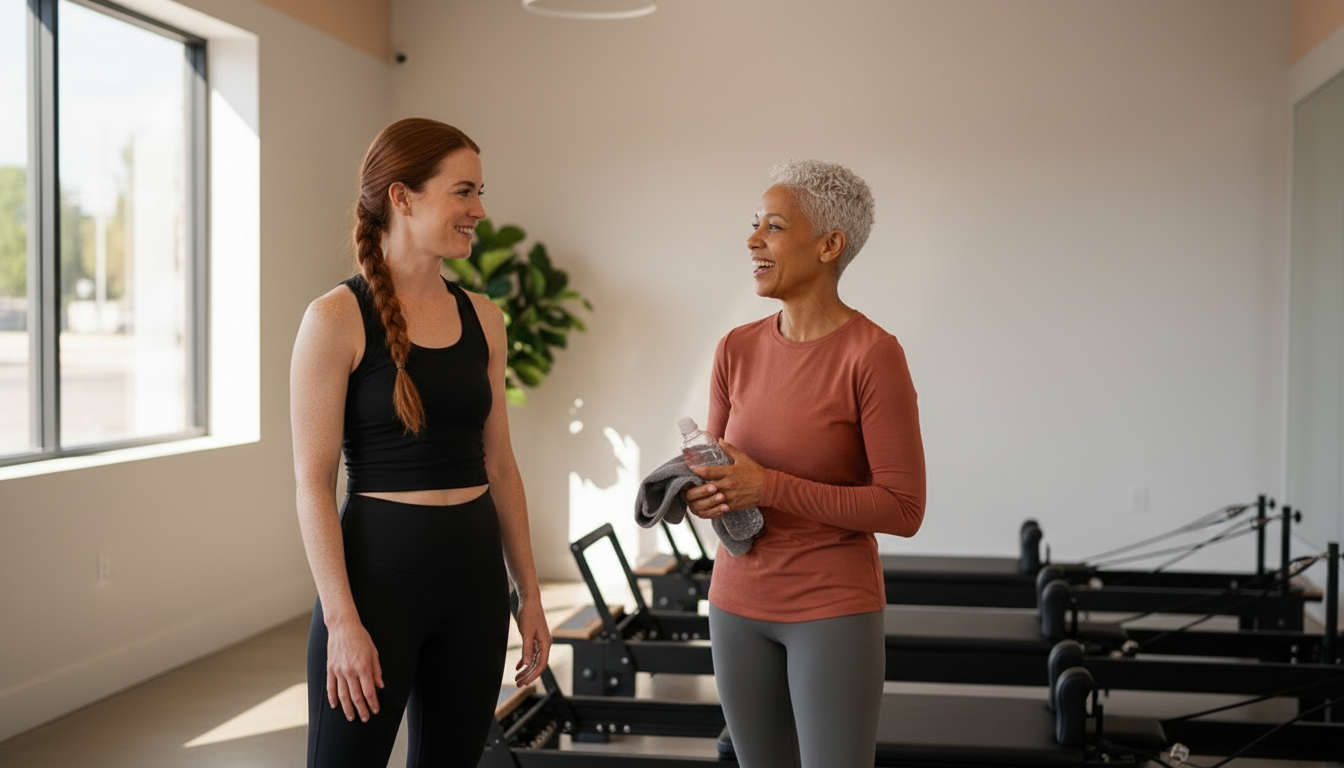
- High-volume boutique franchises: You require larger waiting areas, extended changing rooms, and wider hallways to manage the flow of members between back-to-back classes.
- Premium experience-led studios: Incorporating showers, a retail space, or private treatment rooms demands a considerably larger overall footprint.
Regardless of your model, however, make sure your floor plan includes:
- A clear, welcoming reception area to greet members and manage check-ins.
- Clean, practical, and well-signed restrooms and changing areas.
- A dedicated storage zone for mats, blocks, bolsters, blankets, and cleaning materials.
- A relaxation or tea corner, if this fits your brand identity and community ethos.
A well-designed studio allows movement to flow naturally. When everything has its place, your students feel valued and ready to practice the moment they walk through the door.
Common yoga studio size mistakes to avoid
Even with the best intentions, some common missteps can hold your project back from the start:
- Underestimating the space per student: mats squeezed together make for uncomfortable and distracting classes
- Overlooking service areas: missing storage or changing rooms creates a sense of clutter and disorganisation
- Ignoring legal regulations: check all safety and accessibility norms for public spaces in your area
- Short-term thinking: opting for a space too small “to test things” may limit you just as your studio starts to grow
Choosing the right size for your yoga studio isn’t just about personal taste or budget — it’s a foundational business decision that directly impacts your students’ experience, class flow, and long-term financial health.
To recap:
- Consider your studio location, your style of teaching, and your target audience
- Plan for 2 to 3 m² per student, more if equipment or movement intensity is involved
- Don’t forget the importance of non-practice areas: reception, changing rooms, lounge...
- Most importantly, think long-term: your space should be able to grow with you
Optimizing your yoga studio dimensions with the right software solution
Settling on your yoga studio dimensions sets the physical foundation for your business, yet maximizing the value of that space requires efficient daily management. Once your doors open, you need to ensure your classes are appropriately filled, waitlists update automatically, and your reception area avoids bottlenecks during peak hours.
This is where a dedicated studio management platform supports your operations. The right tools help you optimize your schedule, track class capacity in real-time, and deliver a seamless booking experience that matches the premium feel of your physical studio.
If you want to learn more about how technology can support your physical space and help you scale comfortably, explore how specialized pilates studio management software helps streamline your daily operations.
Frequently asked questions about yoga studio dimensions
Navigating commercial floor plans often brings up specific logistical concerns for founders. To help you finalize your layout and feel confident in your choices, here are practical answers to the most common questions regarding yoga studio dimensions and capacity planning.
What is the average yoga studio size?
A typical boutique yoga studio usually ranges between 100 and 150 square meters (1,076.4-1,614.6 square feet). This total area includes the main practice room, a reception desk, changing areas, and equipment storage.
How much space should I allow per yoga mat?
You should plan for approximately 2.5 to 3 square meters (Gemini said 26.9-32.3 square feet) per student for dynamic classes. This ensures enough room for a standard mat plus a buffer of 50 centimeters (19.7 inches) on all sides for safe movement and teacher adjustments.
Do I need a separate reception area for my yoga studio?
Yes, a dedicated reception area is highly recommended. It acts as a necessary acoustic and psychological buffer between the street and the practice room, while providing a secure space for check-ins and shoe storage.
How do I calculate the maximum capacity of my yoga room?
Divide the total square meterage of your practice floor (excluding teacher space and prop storage) by 2.5. For example, a 50 square meter (538.2 square foot) room can comfortably fit 20 students while maintaining high-quality experience standards.