
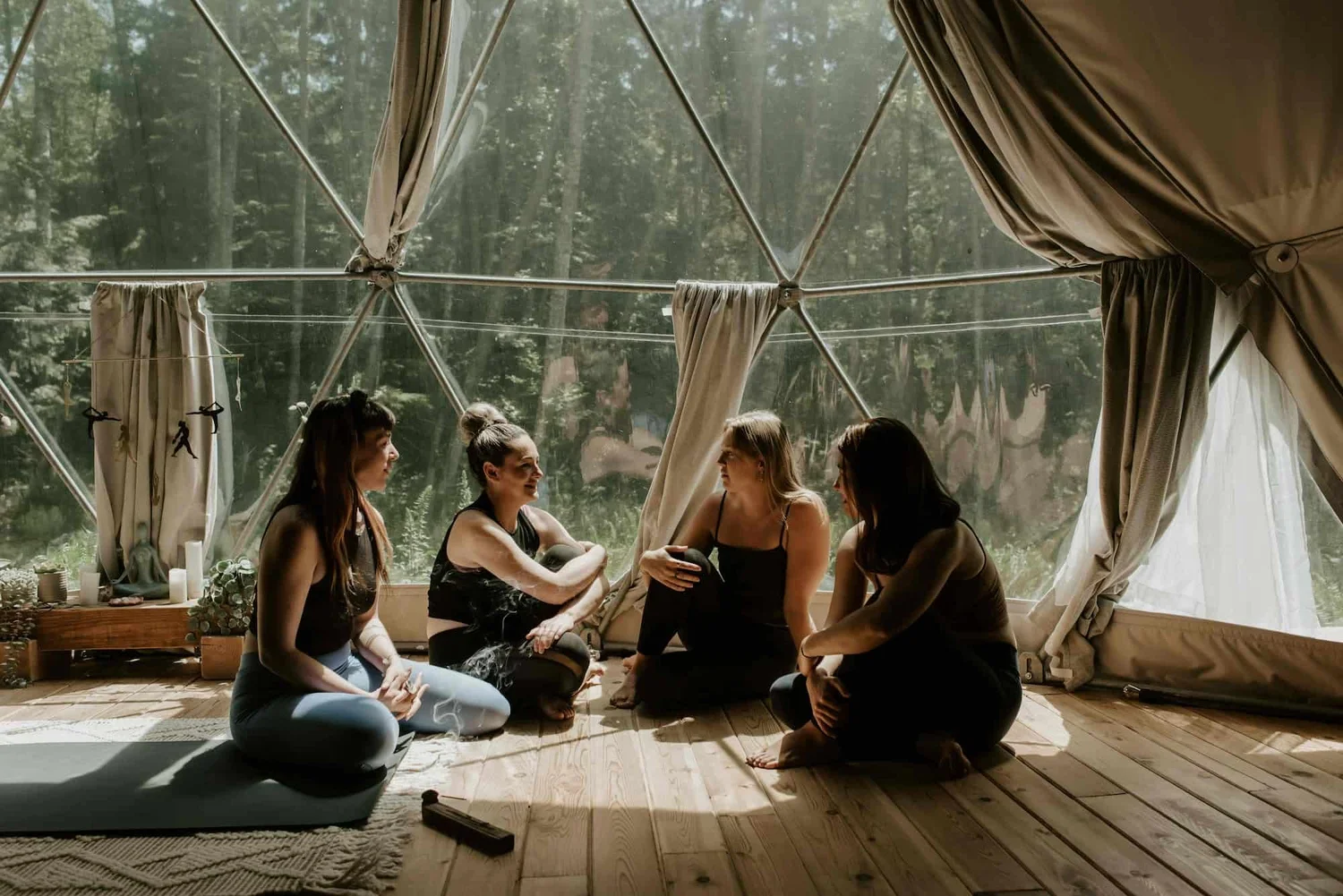

When it's planned well, it deepens member loyalty, generates premium revenue, and builds the kind of community that keeps people coming back long after the retreat ends.
Nailing the details — pricing, contracts, registration, and risk planning — is what separates a smooth, profitable event from an expensive lesson learned.
A thoughtful follow-up strategy, including surveys, testimonials, and direct re-engagement, turns a one-off event into a repeatable growth engine for your studio.
Why offer a yoga retreat?
A well-run retreat creates value that's difficult to generate through regular programming alone. For your studio, it's an opportunity to:
- deepen relationships with your most engaged members
- generate premium revenue in a single event
- differentiate your brand in a crowded market
For participants, it offers focused time to develop their yoga practice, meaningful connections with others in the community, proper rest, and personal growth.
Retreats can also be powerful retention tools. Members who attend a retreat together often form stronger bonds: with each other and with your studio. That sense of belonging tends to translate into longer membership tenure, higher referral rates, and a community that feels genuinely invested in what you're building.
From a revenue perspective, retreats allow you to charge a premium that reflects the full experience: accommodation, meals, multiple yoga classes, and personal access to a specialist yoga teacher. That creates a revenue stream that complements your core membership model without cannibalizing it.
Before you start: Is planning a yoga retreat the right move for your studio?
Before you commit to planning the details, take an honest look at whether the timing is right for your studio. A retreat that isn't well matched to your audience or operational capacity can quietly cost more than it returns.
Start by assessing demand. Do your members talk about wanting more immersive experiences? Are there requests for workshops, intensives, or longer-format events? If the appetite is already there, a retreat is a natural next step. If you're not sure, test it – a short survey or informal conversation with your core members can tell you a lot before you commit to anything.
Also, consider your own bandwidth. Planning a retreat takes significant time and energy, particularly for the first one. If you're already stretched across teaching, admin, and operations, that's worth factoring in before you take on a large-scale event.
That said, you can always start with a small, trial event. A local one-day or weekend retreat lets you test your systems, understand your audience's preferences, and build confidence. A multi-day retreat at a special destination carries significantly higher financial risk. Who knows? Once well-practiced, you may eventually consider international retreats.
How to plan a yoga retreat in 8 steps
1. Define your retreat concept and audience
The theme of your retreat is what makes someone decide to come – and what makes them tell others about it afterward. Start by getting specific: What do you want participants to experience or take away? Who is this retreat designed for?
The answer to that last question shapes almost everything else. A retreat for loyal long-term members will feel very different from one designed for stressed professionals new to yoga, or a teacher-training vehicle for your staff to deepen their expertise. Getting clear on your ideal attendee helps you choose the right format, set the right tone, and market the retreat to the people most likely to attend.
Make sure the concept connects to your studio's wider identity and class programming. The retreat should feel like a natural extension of the way you manage your yoga studio, adding to the sense of community you've already built. A retreat that fits your teaching style and brand is also much easier to talk about, market, and deliver authentically.
2. Set your timeline, budget, and pricing
Most destination retreats benefit from a planning timeline of six to twelve months. This gives you time to secure a venue, run a marketing campaign, fill spots, and handle logistics without rushing. For local or weekend retreats, three to four months is often workable, though more time is always better.
When building your budget, separate your fixed costs (venue hire, accommodation, food, your own travel expenses, insurance, props) from per-person costs (materials, welcome gifts, printed schedules). Add a contingency buffer of around 10–15% to cover unexpected expenses, because something unexpected almost always comes up.
From there, calculate your break-even attendance number: the minimum number of participants needed to cover total costs. Knowing this figure before you market the event helps you price accurately.
On pricing: cover your costs, pay yourself fairly for your time, and build in a margin. Consider offering an early-bird rate to drive early registrations, a member discount to reward loyalty, and a "deposit plus installments" plan to make the total cost more accessible. Be equally clear about your refund and cancellation terms – members need to understand these upfront, and having them documented protects both parties.
3. Choose and secure the right venue
Your retreat location sets the tone for the entire experience. It affects how participants feel, how smoothly the logistics run, and how well you're able to deliver the yoga program you've planned.
Start with access. How far is the venue from your studio? Is it easy to reach by car, train, or plane? Is there parking or reliable transport?
Then look at the actual activity area: Does it have enough space for the group size you're targeting? What's the flooring like? Is there proper ventilation and lighting? Are there adequate props, or will you need to bring your own?
Look at the accommodation and facilities too. Do the guest rooms suit your group? Are there enough bathrooms? Can the venue accommodate different sleeping arrangements if needed?
Check whether the venue operators can handle meals, including specialized dietary requirements. Food is a central part of any retreat experience, and a venue that can't reliably cater to allergies or dietary restrictions will put you on the wrong footing from the start.
The atmosphere matters as much as the practicalities. Visit the site if at all possible before signing anything. Read reviews, speak to the venue staff, and trust your instincts. The right retreat center should feel like it will support your vision, not just accommodate it.
What to include in the venue contract
Before you sign, make sure the contract covers:
- Deposit deadlines and the payment schedule
- The venue's cancellation policy and what happens to deposits if you need to cancel
- Minimum attendance requirements, if any apply
- Room block terms and how rooms will be allocated
- Meal arrangements and how dietary requirements will be accommodated
- Liability responsibilities for both parties
- Weather contingencies or access to backup spaces
- Rules around outside vendors or suppliers
- Check-in and check-out times for the group
4. Set up registration, payments, and guest information
A clear, well-managed registration process builds trust with potential attendees and reduces admin headaches for you. Set these up before you launch publicly:
- Booking page: A dedicated page with retreat details, pricing, inclusions, and a clear call to action to register.
- Deposit and payment plan: Collect an initial deposit to confirm a spot, with a payment schedule for the balance. This spreads the financial commitment for participants and gives you early revenue to cover deposits.
- Refund terms: Clearly state your refund policy at the point of registration — not buried in small print.
- Waitlist: Set one up from the start. If spots fill quickly, a waitlist reduces the risk of losing interested participants and creates a ready pool to contact if cancellations occur.
- Waivers: Collect signed participant waivers before the retreat begins, covering liability, health disclosures, and participation risks.
- Emergency contacts: Collect these at registration. You'll want them on hand for the duration of the retreat.
- Health and dietary information: Gather details on injuries, allergies, dietary needs, and any relevant travel information early, so you can plan meals and the yoga program accordingly.
- Automated confirmations and reminders: Set up automated emails to confirm bookings, send payment reminders, and share pre-retreat information. This saves time and keeps communication consistent.
5. Promote the retreat to your studio community
Your existing members are your warmest audience, so lead your promotion there before going wider. A member-first launch — where your community gets first access before you open registration publicly — creates a sense of exclusivity and rewards loyalty.
From there, layer in your marketing efforts across multiple channels:
- Email campaign: A series of targeted emails to your list covering the retreat details, benefits, pricing, and a clear registration link.
- Teacher announcements: Your instructors can mention the retreat in class, answer questions, and speak personally about why they're excited about it.
- In-studio reminders: Posters, front-desk conversations, and class announcements keep it visible for members who are on the fence.
- Social media: Use social media marketing to share visuals, behind-the-scenes content, and countdown posts. It's a powerful marketing tool for building anticipation.
- Testimonials: If you've run a retreat before, share what past attendees said. Social proof is often more persuasive than any feature list.
- Early-bird deadline: A clear closing date for discounted pricing creates urgency and encourages earlier decisions.
- Referral or alumni incentives: Offer a small benefit to members who bring a friend, or to past retreat attendees who re-register.
- FAQs: Address the most common motives for hesitation — travel logistics, what's included, experience level required — to reduce friction.
6. Plan the retreat experience
The program is the heart of the retreat, and how you structure it will determine how participants feel by the time they leave. A well-designed program balances structured yoga sessions with opportunities for rest, connection, meals, and free time. If every hour is scheduled, the experience can feel more like a boot camp than a retreat.
Think about the overall arc of the event: an opening circle to settle the group and set intentions, a central program that builds progressively, and a closing ritual to mark the end of the experience. Welcome packs and small logistical details (signage, props laid out, music system) all contribute to the experience.
Carefully plan meals, heating and cooling arrangements, transportation to and from the venue, and access to shared spaces. These practical details are easily overlooked in the excitement of program planning, but they're often what participants remember most.
Build the yoga program
Map out the class arc across the retreat so each session builds on the last. A mix of practice styles creates energy and variety: an energizing flow to open the day, restorative yoga or yin in the evenings, breathwork or meditation woven through, and a workshop element that gives participants something to reflect on and take home.
Optional elements like journaling prompts, short philosophy discussions, partner work, or private sessions can add depth for those who want it without imposing on participants who prefer a lighter touch.
7. Prepare your risk and backup plans
Even the best-planned retreats encounter unexpected situations. Having a plan for the most likely scenarios means you can respond calmly rather than reactively:
- Professional liability insurance: Confirm your coverage extends to the retreat format and location, including any outdoor activities.
- Participant waivers: Ensure all attendees have signed before the retreat begins.
- Low registration plan: Know in advance what your threshold is for proceeding, postponing, or canceling – and communicate this clearly with registrants.
- Teacher illness plan: Have a clear process for covering teaching duties if you or a co-teach partner becomes unwell.
- Weather plan: Especially relevant for retreats with outdoor activities – know what your indoor backup looks like.
- Emergency contacts and local medical support: Know where the nearest medical facility is, and have a clear process for escalating health concerns.
- Guest conflict or code-of-conduct policy: Outline expectations for group behavior in advance so you have a framework to refer to if a difficult situation arises.
- Travel delay or transportation backup: Have a contingency plan for late arrivals or disrupted transport, particularly for destination retreats.
On the day: Running the yoga retreat
A morning checklist before guests arrive goes a long way: confirm rooms are ready, meals are on track, props and music are set up, signage is in place, and welcome packs are prepared before the first participants walk through the door.
Brief your teaching team, venue contact, and any support staff before the group arrives so everyone knows their role and the daily schedule.
Be present as participants check in and for the introductory gathering, ideally a gentle opening circle or low-pressure icebreaker. Not everyone will know each other, and giving the group a chance to connect early sets the tone for the rest of the retreat.
Once things are underway, keep the schedule flowing without being too rigid. Allow enough flexibility for rest, questions, and the small delays that are a natural part of any group event.
Stay visible and accessible so you can track any issues or feedback as they arise. Keep clear notes that you can refer to afterward.
After the retreat: Turn feedback into future growth
What you do in the days after the retreat has a significant impact on what comes next – both for your relationship with attendees and for the success of future events. Start with a genuine thank-you email within 24–48 hours, while the experience is still fresh.
If participants gave you permission to take photos, share a selection of the best shots. A short recap or a behind-the-scenes social media post can also reinforce the community feel and give non-attendees a sense of what they missed.
That's basic etiquette and community-building, but to specifically address the business side, some essential practices are:
- Send a follow-up survey to gather honest feedback on what worked well and what could be improved. Ask specifically about the yoga program, accommodation, meals, pacing, and overall experience.
- Request testimonials from participants who express enthusiasm – a short, specific quote about their experience is one of the most effective marketing tools you have for the next retreat.
- Review your financials, such as actual revenue, attendance, and any unexpected costs, against your original projections.
- Document what worked, save your planning templates and vendor contacts, and note any logistics you'd handle differently.
Planning a yoga retreat that strengthens your studio community
Done well, a yoga retreat deepens the relationships that already exist in your community, generates meaningful revenue, and creates the kind of shared memory that keeps members engaged long after they return home.
What makes that possible is attention to the details: a clear concept, honest pricing, a venue that fits, and a program that delivers. Those details are easier to execute if you have suitable systems for managing attendance and communication without everything falling on you manually.
Yoga retreats can work for studios of all sizes: the key is to approach each event with intention, learn from it, and build on it the next time.
If you're ready to explore how bsport can support your studio's community events (as well as day-to-day operations and memberships), book a demo to see it in action.


.png)
%20(2).jpg)