

Glossary of Pilates Terms
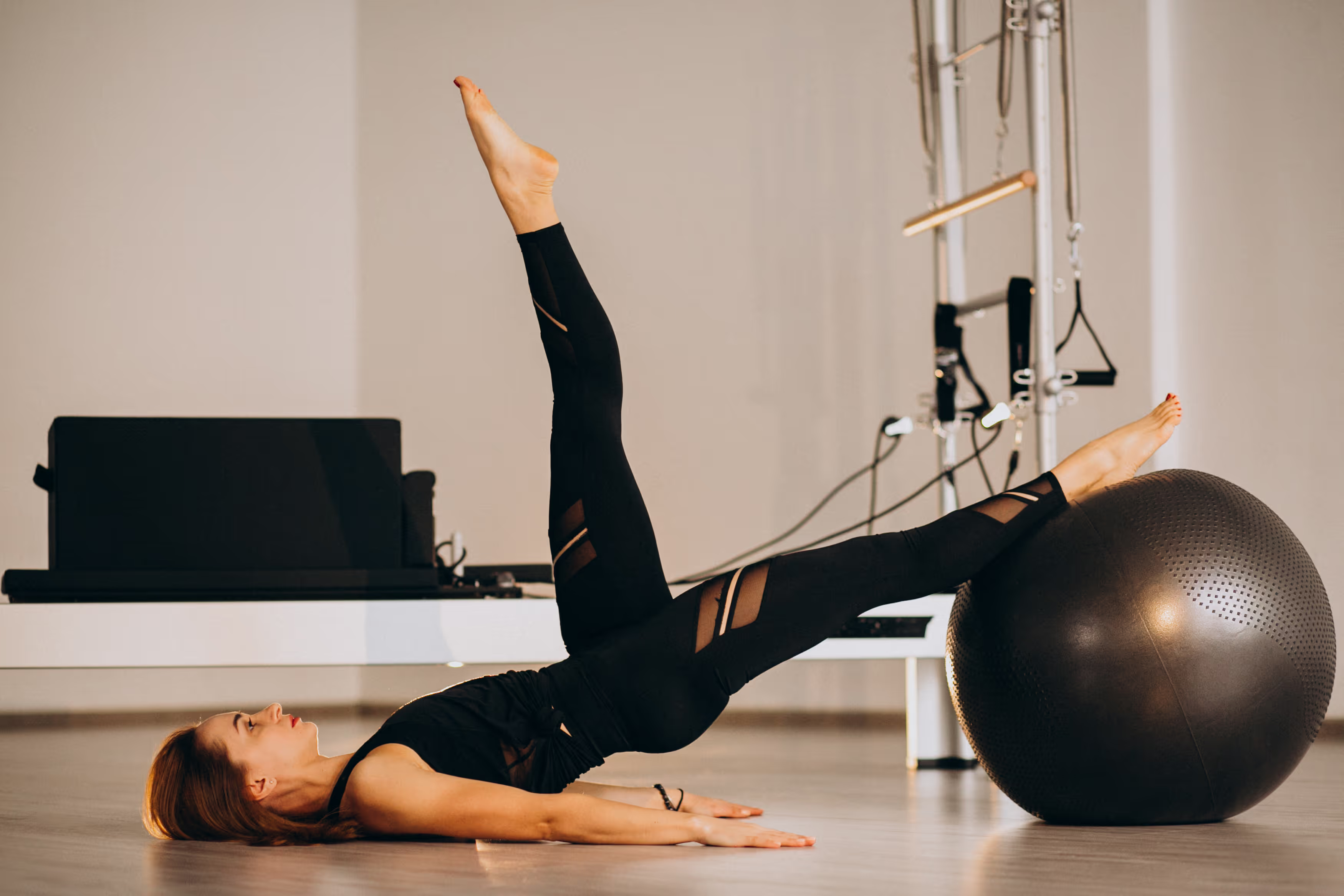
Pilates is a structured system of movement that develops strength, coordination, mobility, and postural control through precise, low-impact exercises and intentional breathing. The method was created in the early 20th century by Joseph Pilates, who believed that shallow breathing, poor posture, and modern sedentary lifestyles contributed directly to illness and physical dysfunction. He began developing his approach while working with injured soldiers during World War I, using modified equipment to support rehabilitation.
After moving to New York in the 1920s, Pilates refined his system with dancers and athletes seeking greater control, balance, and injury prevention. Over time, the method expanded into physical therapy clinics, fitness studios worldwide, and the practice we all know today.
Learning common Pilates terminology can help new practitioners and potential studio owners follow class instructions more easily, understand how exercises are performed, and recognize how different movements support stability, flexibility, and overall body awareness, leading to a more confident and enjoyable practice.
Abdominals: The muscles across the front and sides of the torso that help stabilize the spine and transfer force during movement
Adductors: Inner-thigh muscles that draw the legs toward the body's midline and contribute to pelvic stability
Alignment: The arrangement of the head, spine, shoulders, hips, and joints so that the body moves efficiently and with reduced strain
Assisted Stretch: A flexibility exercise supported by equipment or another person to increase the range of motion safely
Articulation: Moving the spine or joints gradually, one segment at a time, rather than as a single rigid unit
Axial Elongation: Lengthening upward through the crown of the head and downward through the tailbone to reduce compression in the spine
Chair: A compact spring-based Pilates apparatus used for seated, standing, and balance-focused exercises
Corkscrew: A controlled exercise in which the legs move in circular patterns while the torso remains stable against the mat
Coordination: The ability to perform multiple actions smoothly and in the intended sequence
Crisscross: A rotational abdominal movement similar to a slow, controlled bicycle action
Double Leg Stretch: A core exercise where both arms and legs extend away from the body before returning to the center with control
Fascia: A network of connective tissue that surrounds muscles and organs and helps transmit force throughout the body
Footwork: A Reformer sequence that strengthens the legs and reinforces lower-body alignment
Forward Bend: Folding at the hips to stretch the back of the body and lengthen the spine
Glutes: The muscles of the buttocks that support hip movement and pelvic stability
High Bridge: A deep back-arching position performed on the mat or apparatus to challenge strength and flexibility
Hip Circles: Circular leg movements used to strengthen the muscles surrounding the hip joint and improve control
Hundred: A traditional warm-up exercise combining rhythmic arm pumping with steady breathing to activate the core
Imprinting: Gently drawing the lower spine toward the mat to engage the abdominal muscles and limit excessive arching
Intermediate: A practice level intended for individuals who have mastered foundational movements but are not yet performing advanced sequences
Inversion: Any posture where the head is positioned lower than the heart
Jackknife: A challenging rolling movement that lifts the hips upward while maintaining control through the trunk
Joint Movement: Motion that occurs where two bones meet, such as at the knee, hip, or shoulder
Kneeling Side Kick: A balance-focused exercise performed from a kneeling position to strengthen the hips and torso
Lateral Flexion: Bending the spine to the side while maintaining length through the opposite side of the body
Leg Circles: Circular motions of the raised leg performed while lying on the back to improve hip mobility and trunk stability
Long Stretch: A plank-based Reformer exercise that challenges strength in the shoulders, arms, and core
Magic Circle: A lightweight resistance ring used to add challenge to both upper- and lower-body exercises
Mat: A padded surface designed to provide support and traction during floor-based Pilates movements
Mermaid: A seated side-bending stretch that opens the rib cage and lengthens the torso
Neutral Spine: Maintaining the natural curves of the back rather than flattening or exaggerating them during exercise
One Leg Circle: A stability drill in which one leg traces controlled circles while the rest of the body remains still
Open Leg Rocker: A seated rolling balance exercise performed on the sit bones
Pelvic Curl: Slowly lifting and lowering the hips to articulate the spine and strengthen the muscles along the back of the body
Pilates: A method of exercise focused on controlled movement, postural awareness, and balanced muscular development
Plank: A straight-body support position that builds strength in the shoulders, abdomen, and legs
Powerhouse: The central region of the body, including the abdominals, lower back, hips, and gluteal muscles, used to stabilize movement
Prone: Lying face down
Quadruped: A hands-and-knees position often used to practice balance and spinal control
Roll Over: A movement in which the legs travel overhead while the upper body remains grounded
Roll Up: Lifting the spine from the mat to a seated position, one segment at a time
Scissors: Alternating leg lifts performed with abdominal engagement to challenge stability
Side Plank: A lateral support posture balanced on one arm and the side of one foot
Spine Stretch: A seated forward-folding exercise intended to lengthen the back muscles
Spine Twist: Rotating the torso from a seated position while maintaining an upright posture
Swan: A prone exercise that strengthens the back muscles and encourages spinal extension
Teaser: A demanding balance movement in which the body forms a V-shape
Tower: A vertical-frame apparatus that uses spring resistance for strength and mobility work
Up Stretch: A flowing Reformer exercise combining elements of strength training and flexibility
V-Sit: A seated balance position shaped like the letter V
Wall: A support surface used to assist posture, balance, or resistance exercises
Wunda Chair: A spring-loaded platform apparatus used for standing, seated, and full-body conditioning movements
X-Cross: A diagonal abdominal exercise emphasizing rotational strength
Y-Position: Extending the arms or legs upward and outward to form a Y shape
Z-Curve: A flexed spinal position with a rounded appearance through the back
Additional Resources
- Pilates: Benefits, Techniques, and History
- What Is Pilates?
- The History of Joseph Pilates
- Pilates: How Does it Work, and Who Needs It?
- What Is Pilates Reformer?
- A Guide to Your Core Muscles
- Getting Started on the Path to Better Balance
- Pilates Studio Management Software
- Diaphragmatic Breathing
- How to Achieve Neutral Spine Alignment
- Five Exercises to Strengthen Your Pelvic Floor
- Kegel Exercises: A How-to Guide for Women
- Opening a Fitness Studio
- How to Use Pilates Props
- The Body/Brain Connection: Pilates for Mental Health
- Pilates for Beginners
- Studio Franchise Software
- A Complete Guide to Pilates for Beginners


Other blog posts
